Free Worldwide standard Shipping



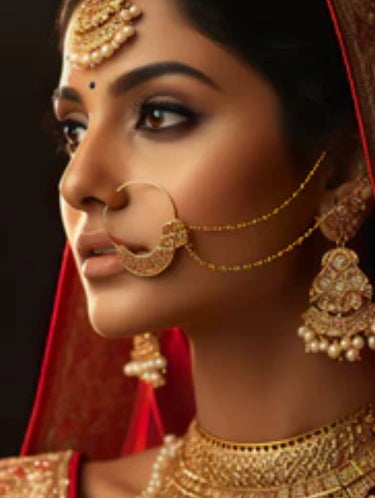

Indian adornments are beyond mere decoration—they embody a display of heritage, customs, artistry, and selfhood. For ages, they have signified status, wealth, faith, and festivity. Currently, Indian pieces are appreciated and donned globally, crossing boundaries and societies.
Here at Tazori Collection, where upscale quality meets accessibility and heritage joins new ideas, we honor the enduring allure of Indian jewellery and the narratives it holds.
Ancient Origins of Indian Jewellery
Indian jewelry's story stretches back more than five millennia, originating in the Indus Valley period. Discoveries show that both sexes sported adornments made of gold, beads, and precious stones. Beyond simple decoration, these pieces denoted social standing, offered safeguarding, and expressed faith.
In olden India, adornments held deep connections with faith and ceremony. Hallowed designs, gems, and metals were thought to possess heavenly power, thus making jewelry a crucial element of everyday existence and devotion.
Royal Influence and Craftsmanship
As Indian monarchies thrived, the art of making ornaments attained remarkable heights. Princely houses ordered complex patterns fashioned from gold, valuable gems, pearls, and detailed metal structuring. Methods like Kundan, Polki, Meenakari, and Jadau appeared during this era and still shape contemporary styles.
Every area across India cultivated its own distinctive adornment aesthetic — ranging from devotional pieces in the southern lands to richly detailed Mughal-influenced creations up north. These local divergences enhanced the richness and variety within the Indian traditions of personal ornamentation.
Jewellery as a Cultural Symbol
Indian adornments are key to major life events such as births, marriages, celebrations, and rites. Bridal pieces, especially, carry profound personal and cultural meaning, representing good fortune, dedication, and the continuation of custom.
Treasured items are frequently handed down across generations, maintaining a family's story and legacy. This sentimental worth is a primary factor in the enduring charm of Indian jewellery.
Global Recognition and Modern Adaptation
Global notice for Indian adornments grew via commerce, colonial influence, and shared cultural understanding. Lately, worldwide connection and the Indian diaspora have boosted its appeal even more.
At present, Indian ornaments are valued globally for their skill, narrative quality, and adaptability. Makers weave age-old methods with newer forms, resulting in items attractive to today's diverse, global consumers. Jewelry mixing Indian and Western styles is particularly sought after, connecting ancestry with current fashion movements.
Why Indian Jewellery Is Loved Globally-
- Rich craftsmanship rooted in centuries-old techniques
- Cultural depth and symbolism beyond aesthetics
- Versatility, suitable for both traditional and modern outfits
- Timeless appeal that transcends trends
From red carpets to everyday fashion, Indian jewellery continues to inspire designers and fashion lovers around the world.
Tazori Collection: Honoring Tradition, Embracing Innovation
At Tazori Collection, we draw inspiration from India’s rich jewellery heritage while designing for today’s global woman. Our pieces reflect traditional artistry with modern elegance, offering luxurious designs at accessible prices.
Every creation is a tribute to the past — reimagined for the present.
Conclusion-
The narrative of Indian adornments mirrors a fusion of heritage, artistry, and lasting tradition. Its worldwide allure arises from its capacity to transform while preserving its core essence. As Indian ornamentation keeps fascinating the planet, it endures as a potent emblem of grace, selfhood, and enduring style.
With the Tazori Collection, you are not simply donning pieces—you are displaying a narrative, a way of life, and an inheritance stretching across eras.